
Torrens, Community and Strata Subdivision: What's the Difference and Which One Do You Need?
Key Points:
A subdivision land survey is the legal process of dividing land into separate lots, forming the foundation for Torrens, strata, or community title structures.
A Torrens title subdivision provides full ownership and control of land, making it ideal for standalone residential developments.
A Strata title survey allows individual ownership within multi-dwelling developments while sharing responsibility for common property through an owners' corporation.
A Community title subdivision offers a hybrid model with individual land ownership and shared responsibility for infrastructure, suited to estates and developments with common amenities or services.
Summary:
Choosing the right subdivision structure is a critical step in any development, and understanding what a subdivision survey is helps clarify how land can be divided into legally separate lots. This guide explains the key differences between Torrens title subdivision, Strata title subdivision, and Community title subdivision, including how ownership, responsibilities, and shared infrastructure are managed. With expert support from a licensed land surveyor like Peak Surveyors, developers and landowners can confidently select the most suitable approach for their project.
Outline:
If you're planning a property development in New South Wales or Victoria, one of the first questions you'll need to answer is: what type of title subdivision suits your project? It sounds straightforward on the surface, but the differences between Torrens, Community, and Strata title subdivisions are significant, and choosing the wrong path early on can create headaches down the track.
For developers, builders, or landowners looking to split a residential block, build a unit complex, or create a shared estate, understanding how each title type works can help save time, money, and a great deal of uncertainty.
At Peak Surveyors, we work with clients across Albury, Wodonga, Wangaratta, Bright, Wagga Wagga, and the wider regional corridor every day on exactly these questions. In this article, we'll break down each title type in plain English so you can walk into your next project with confidence.
What is a Land Subdivision Survey?
Before diving into the different title types, it helps to first answer the question, “What is a subdivision survey?”
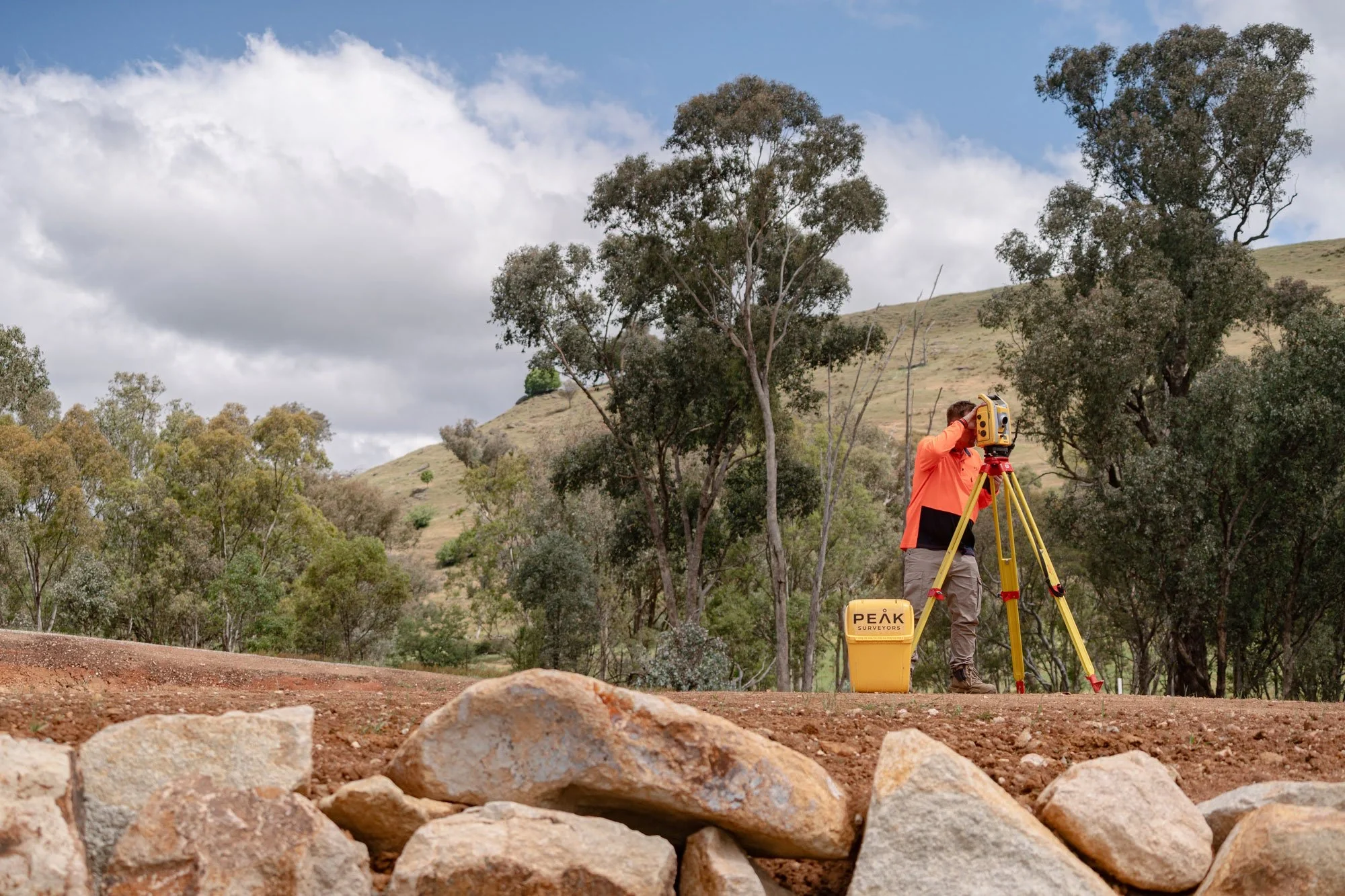
A subdivision land survey is the formal process of dividing one parcel of land into two or more separate lots. Each new lot receives its own legal title, allowing it to be sold, developed, or managed independently.
This process applies across a wide range of projects, including:
Splitting a residential block into multiple lots
Creating a townhouse or unit development
Designing a shared community estate
The type of title you create, Torrens, Strata, or Community, depends on how the land and any shared areas are structured.
In Australia, subdivision land surveying is governed by state legislation, which means requirements can differ between New South Wales and Victoria. Engaging a licensed land surveyor to prepare a plan of subdivision ensures your project meets all regulatory and lodgement requirements.
What is a Torrens Title Subdivision?
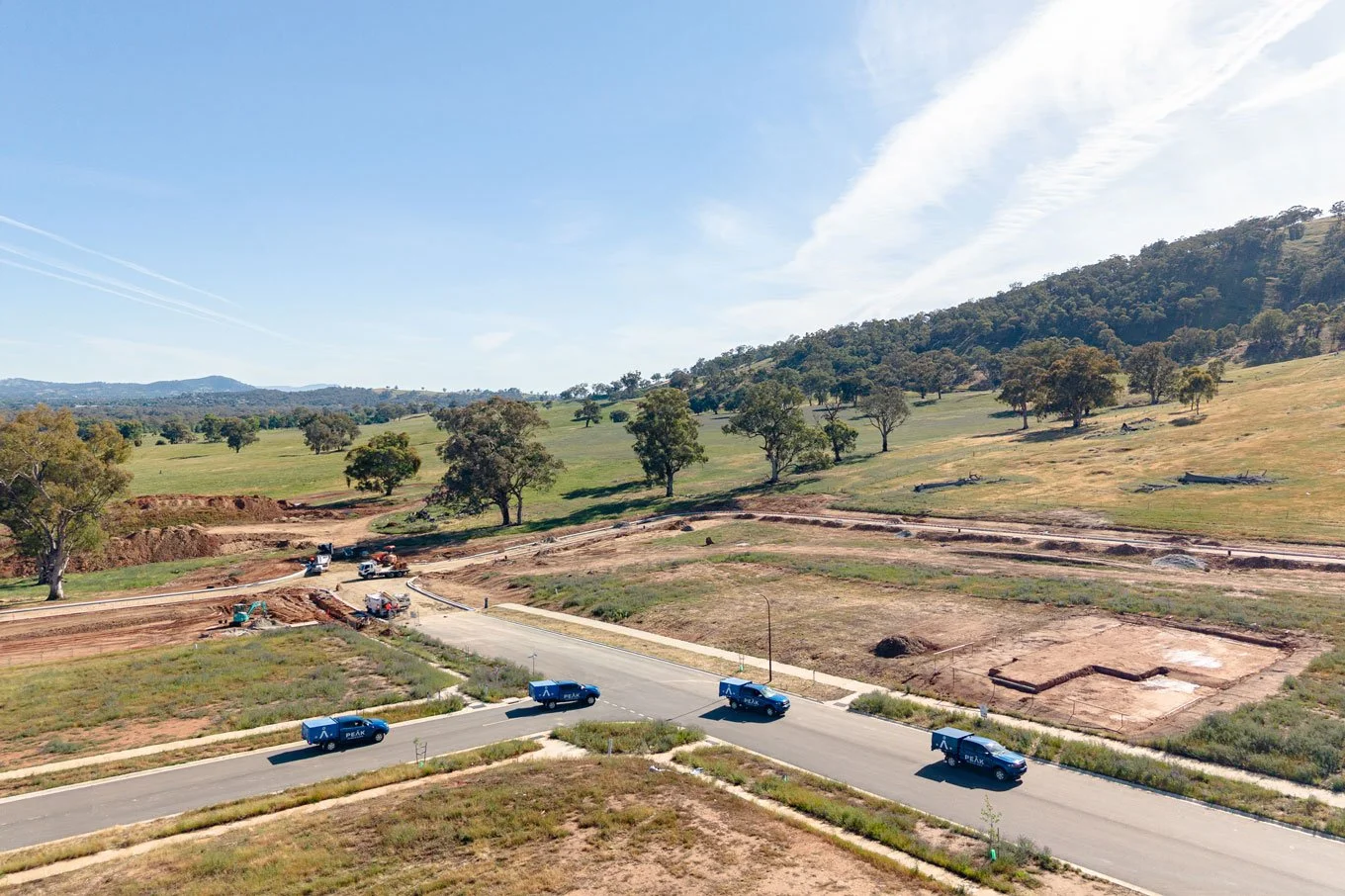
A Torrens title is the most common form of land ownership in Australia, and it forms the foundation of the majority of subdivision land surveys carried out across NSW and Victoria.
In a Torrens title subdivision, individual lots can be created where each owner holds full and independent ownership of their land. This is the traditional model most people associate with owning a house.
How Torrens Title Subdivisions Work
A Torrens title subdivision involves a licensed land surveyor preparing a plan of subdivision that creates two or more individual lots from an existing parcel. Each lot is registered separately, and the owner of each lot has full autonomy over their land.
This means you can build, extend, landscape, or otherwise develop your lot without seeking approval from any other owners. It's your land, and you make the decisions.
When is Torrens Title Best Suited?
Torrens title subdivision is ideal for:
Splitting a residential block into two or more standalone house lots
Rural land subdivisions where lots can be clearly defined and independently accessed
Dual occupancy developments where planning controls permit Torrens title separation
Any development where full individual ownership and maximum control are the priority
Because Torrens title lots give buyers sole ownership without the ongoing obligations of a shared scheme, they tend to be more attractive on the market and command stronger resale values. For developers, that's a meaningful consideration.
What is a Strata Title Subdivision?
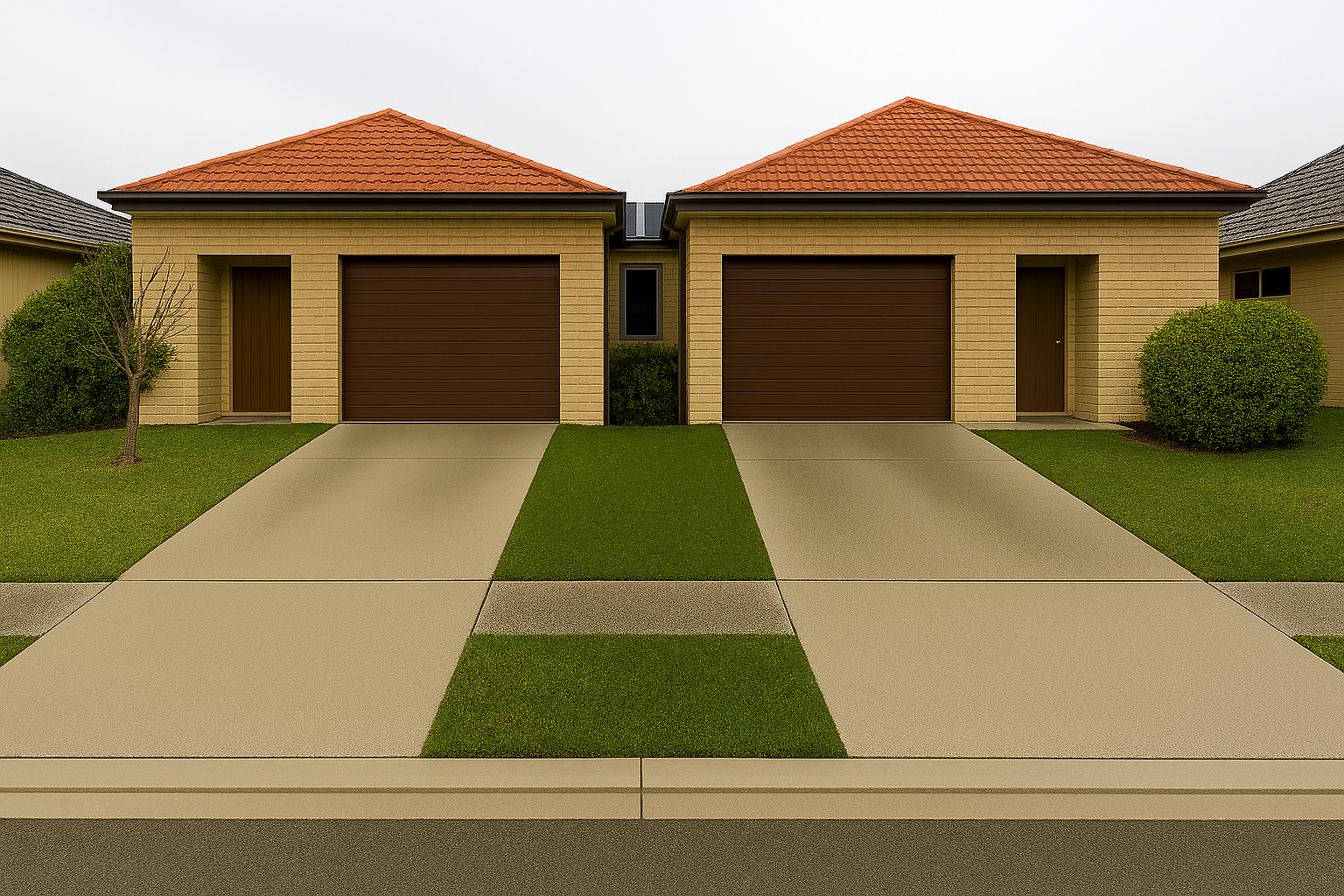
The word "strata" means several portions or divisions, and that definition captures the essence of Strata title perfectly. A Strata title subdivision creates individually owned lots within a larger development, where each lot owner also shares ownership of the common property with all other lot owners in the scheme.
In practical terms, this means a person can purchase a specific dwelling within a multi-unit development, such as an apartment, unit, or townhouse. They then hold the legal title to that portion of the development, while also benefiting from shared access to common areas such as driveways, open space, waste collection zones, and other shared infrastructure.
How Strata Title Subdivisions Work
Under a Strata scheme, an owners' corporation (formerly known as a body corporate) is established to manage and maintain the common property. Each lot owner pays levies to fund this maintenance. If you want to make changes to your lot, particularly anything that affects the external appearance or structural elements of the building, you will generally need to seek approval from the owners' corporation before proceeding.
Strata boundaries are typically defined by the physical structure of the building itself, such as the walls, floors, ceilings, and roofs. You own the "airspace" within those boundaries, while the structure and common areas are collectively owned.
When is a Strata Title Best Suited?
Strata plans are typically used for:
Dual occupancies where planning controls prevent Torrens title separation
Multi-dwelling housing
Residential flat buildings and apartment complexes
Mixed-use commercial and residential buildings
Industrial buildings with multiple tenancies
As multi-dwelling developments become increasingly common across regional NSW and Victoria, Strata subdivision has become an important tool for developers looking to create individual, sellable lots within a single building or complex.
In situations where Torrens title subdivision is not possible due to site constraints, planning controls, or servicing constraints, Strata subdivision provides a workable and commercially viable alternative.
What is a Community Title Subdivision?
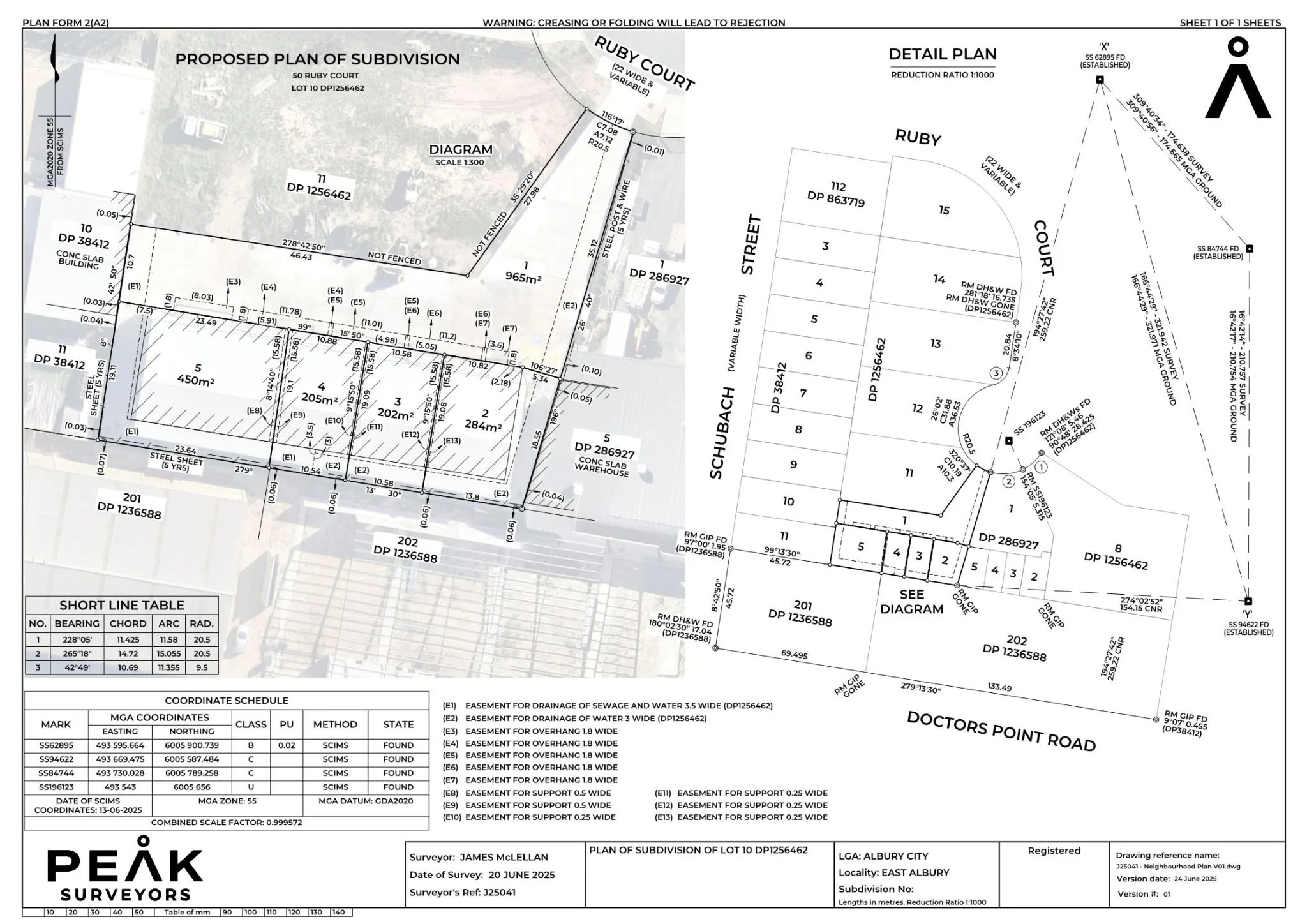
A Community title subdivision sits somewhere between Torrens and Strata title. Basically, it creates individually owned lots with land boundaries (like Torrens), but within a shared development scheme that includes communally managed infrastructure (like Strata).
This type of title is specific to NSW and is governed by a Community Management Statement, which sets out the rules and responsibilities for the community association. This association manages and maintains the shared infrastructure, which typically includes private roads, open space, or recreational facilities that serve all lot owners within the scheme.
How Does a Community Title Subdivision Work?
Under a Community title scheme, each lot owner holds title to their individual parcel of land, with boundaries set by surveyed dimensions. This means you can build or extend on your lot, subject to council approval, with fewer restrictions than you'd face under a Strata scheme.
However, Community title lots do not exist in isolation. Each lot owner is required to contribute to the costs of maintaining the association property, which is the shared infrastructure that serves the wider development. This might include maintenance of a private road, utilities, vegetation management, or upkeep of recreational areas.
When is Community Title Best Suited?
Community title is often used for:
Residential estates
Medium-density developments
Rural cluster subdivisions
Projects with shared access, amenities, or private internal services
It is a strong option when you need shared infrastructure but still want land-based ownership.
Torrens, Strata, and Community Title Subdivisions: Which One Should You Choose?
Choosing between the three title types comes down to your development goals, the nature of your project, and your priorities around ownership, control, and ongoing costs.
Here is a simple way to compare your options:
Level of Control and Privacy
Choose Torrens if you want total autonomy over your property, including renovations, building design, and landscaping, without needing approval from a body corporate or owners' corporation.
Choose Strata or Community if you're comfortable with some level of governance over external changes and shared areas, in exchange for a collective approach to maintenance and amenity.
Maintenance Responsibility
Torrens: You are solely responsible for everything on your land, such as buildings, fences, utility connections, landscaping, and all maintenance.
Strata/Community: Maintenance of shared areas is managed collectively. You pay levies to cover these costs, spreading the load across all lot owners.
Financial Implications
Torrens title properties often carry a higher purchase price due to the independence they offer, but there are no ongoing levies or shared fees.
Strata and Community title lots often have a lower entry point, but they involve regular levies and the potential for special levies to cover large or unexpected repairs.
Type of Development
Torrens: Ideal for houses and low-density developments
Strata: Best for apartments and multi-level buildings
Community: Suitable for estates or sites with shared infrastructure
Each structure serves a different purpose. The key is aligning your subdivision approach with your development goals, planning controls, and long-term ownership strategy.
Ready to Get Started? Talk to the Team at Peak Surveyors
Choosing the right title structure is not just a technical decision, it is a strategic one that can influence the success of your entire project.
At Peak Surveyors, we provide clear, practical guidance backed by years of experience in subdivision land surveying across NSW and Victoria. From helping you understand your options to delivering a compliant subdivision land survey, our team supports you at every stage.
Whether you are planning a Torrens, Strata, or Community title subdivision, we will ensure your project is set up correctly from the outset.
If you are ready to move forward or need expert advice, get in touch with Peak Surveyors today and speak with a trusted professional who understands your project from the ground up.